A clone is only worth what its genetics are, and cannabis has no registry. Strain names get attached to random cuts, "Wedding Cake" from one nursery is not the "Wedding Cake" from another, and a mislabeled mother can cost a farm a whole season. "Breeder-certified" at Prime Cuts Nursery means we can tell you, for every cultivar on the menu, where the cut came from and how it got here — and we document it in the [strain encyclopedia](/strains) and the [genetics network](/strains/genetics-network) so you can check.
Three ways a strain gets onto our menu
- Breeder-direct cuts. The cut came from the breeder who made the strain, or from their designated release, and we propagate that exact selection. Examples: Tiki Madman's Oreoz Blizzard (Oreoz × Lemon Iccee) and Pablo's Revenge (Animal Mints × Sherb Cake); Seed Junky Genetics' Wedding Cake; Capulator's MAC 1 (Alien Cookies F2 × Miracle 15); Backpackboyz' Lemon Cherry Gelato; BeLeaf Cannabis' original selected White Truffle cut, Cobra Chi and Cakemera #12; Lovin' in Her Eyes' Banana Ice Pop; Rasta Cruz Farms' Lemon Mash and Tree Flip.
- In-house pheno-hunts from named seed lines. We pop the breeder's seed, run the population, and keep the single best expression as a mother. Our Stunna Runtz, Caked Up Candy and Tropicana Cherries are Prime Cuts selections from Relentless Genetics seed — the lineage is the breeder's, the phenotype is ours.
- Prime Cuts originals. Crosses bred and selected here: #34 (Tropicanna Punch × Wedding Cake), Donkey Kong (GG#4 × undisclosed), Purple Porcelain, GDP × Purest Indica, Jolly Rancherz (#34 × Zlurpee #11) and Zlurpee (Zkittlez × Purple Punch), which The Keep Motive used with our #34 to breed Candiez.
Where a parent is undisclosed by the breeder we say "undisclosed" rather than guess, and where a strain's origin is genuinely unknown (our King Louis OG and SFV OG cuts are legacy California OG selections) the menu says so.
Why provenance matters commercially
- Predictability. A known cut behaves the same way every run: flowering time, stretch, feed response, finish. That is what lets a farm plan rooms and harvest windows.
- Honest expectations. We tell you what a cut actually tests at and where it struggles, because we have grown it. Chasing a strain name without provenance is how growers end up with a mold-prone indoor cut in a full-term field.
- Respect for breeders. Breeder-direct sourcing means the people who made the genetics are credited — and it means the cut is what it says it is.
How lineage is documented
Every menu strain links to its encyclopedia entry with breeder, parents, type and ratio, THC range, dominant terpenes, flowering time, yield and grower's notes, plus links to the parent strains' own entries. The genetics network draws these relationships as a graph — you can follow Wedding Cake through #34 and Zlurpee to Candiez and Jolly Rancherz, or trace Runtz through Stunna Runtz and Caked Up Candy. Where the community disputes a lineage, the entry says so instead of picking a side. The same data is exposed in structured form on each page and through our public API for anyone who wants to verify it.
Clean genetics are part of certification
A correctly labeled cut carrying Hop Latent Viroid is still a bad cut. Every mother behind these strains is RT-qPCR-tested for HLVd and Fusarium on a recurring schedule, and every new genetic goes through quarantine and testing before it enters the library — about 28% of incoming cuts, including some famous ones, fail. Provenance and pathogen status are two halves of the same promise. Details on the HLVd testing page.
Related genetics on our menu
Availability reads from the same inventory as live inventory (as of Oct 22, 2026).
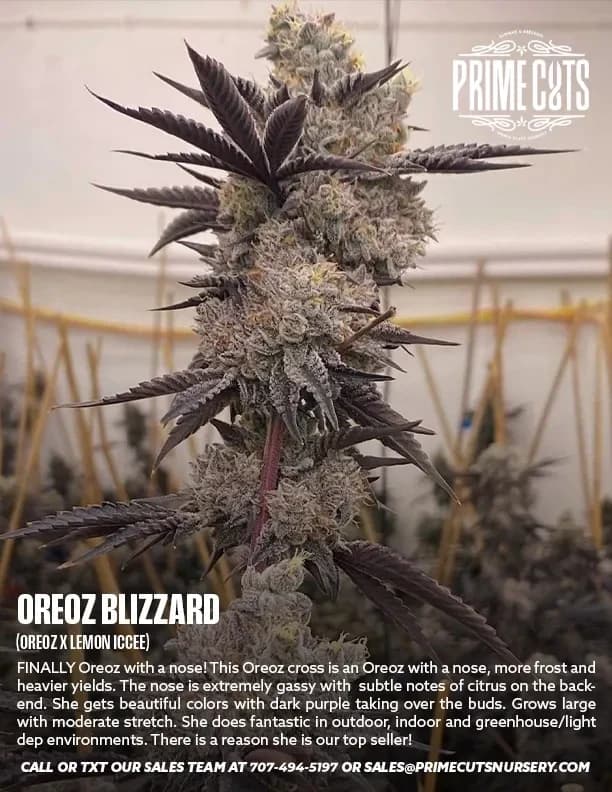 In stock · 1,398 fresh · 775 talls
Oreoz Blizzard
Tiki Madman · Indica · 8-9 weeks
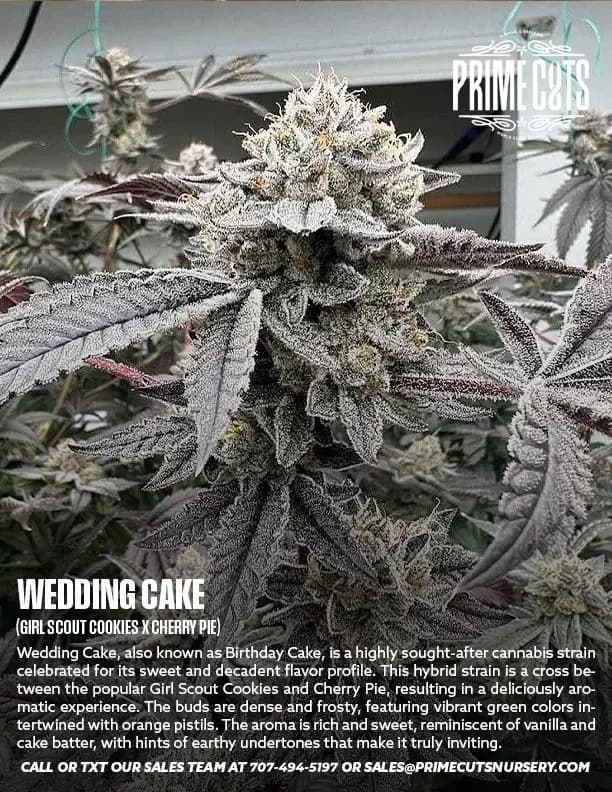 In stock · 250 fresh · 400 talls
Wedding Cake
Seed Junky Genetics · Hybrid · 8-9 weeks
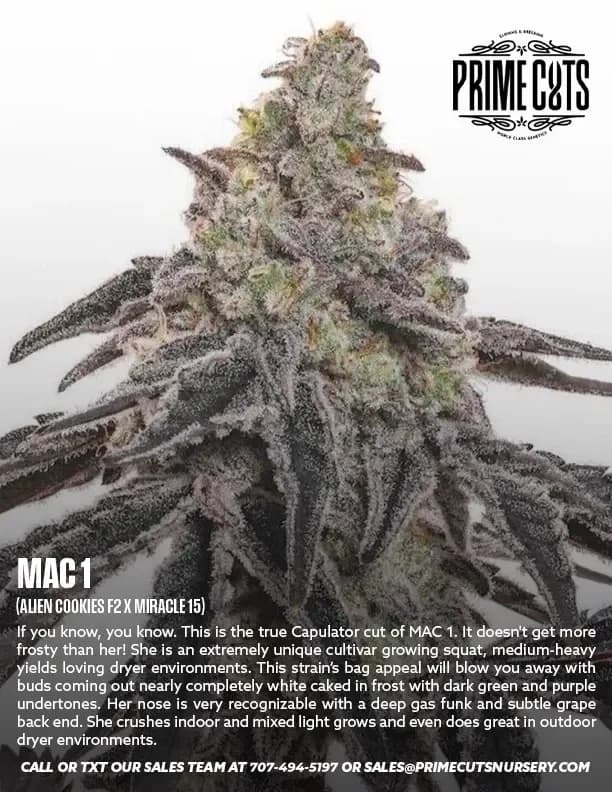 Not scheduled
MAC 1
Capulator · Hybrid · 8-9 weeks
 Not scheduled
Stunna Runtz
Relentless Genetics · Hybrid · 8-9 weeks
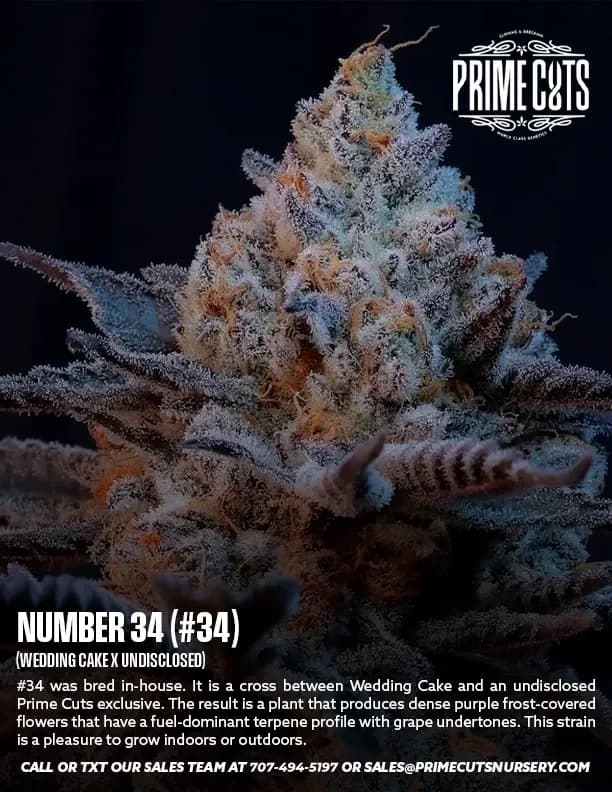 In stock · 542 fresh · 880 talls
#34
Prime Cuts · Indica · 8 weeks
 Not scheduled
Candiez
The Keep Motive · Hybrid · 8-9 weeks
Frequently asked questions
What does "breeder-certified" mean at Prime Cuts?
That we can document where each cut came from: breeder-direct release, our own pheno-hunt from a named breeder's seed line, or a cross we bred ourselves. The lineage is published on every strain's encyclopedia entry.
Which breeders' genetics do you carry?
Tiki Madman, Seed Junky Genetics, Capulator, Backpackboyz, BeLeaf Cannabis, Lovin' in Her Eyes, Rasta Cruz Farms and The Keep Motive, plus Relentless Genetics lines we pheno-hunted in house and our own Prime Cuts crosses.
Is your Wedding Cake the real Seed Junky cut?
Our Wedding Cake is sourced from Seed Junky Genetics (Girl Scout Cookies × Cherry Pie lineage).
What if a parent is undisclosed?
We write "undisclosed" and leave it there rather than invent a parent. Where lineage is disputed, the encyclopedia entry notes the dispute.
Do you breed your own strains?
Yes — #34, Donkey Kong, Purple Porcelain, GDP × Purest Indica, Jolly Rancherz and Zlurpee are Prime Cuts originals, and we pheno-hunt seed lines from breeders like Relentless Genetics to select the mothers we run.
Talk to the nursery
Licensed cultivator in California? Call or text with strains, quantities and your target week. Nursery hours Mon–Fri 9am–5pm PT.